
Food, fiber, and fuel all begin on farms, but not all farms work the same way. Climate, land size, labor, technology, and market access shape how people grow crops and raise animals, creating distinct approaches with different strengths and trade-offs.
This article explains major types of agriculture, comparing what they produce, how they operate, and where they are most common, so you can quickly understand the real-world differences behind familiar terms.
Subsistence and Smallholder Farming
Subsistence agriculture focuses on feeding the farm household first, with limited surplus sold locally. It is common where landholdings are small, cash inputs are scarce, and families rely heavily on their own labor. Yields can vary widely, but the system often prioritizes risk reduction—growing several crops, keeping a few animals, and spreading planting dates to avoid total loss.
Smallholder farms may be subsistence-oriented or market-oriented, but they typically operate on a few hectares or less. Because income is sensitive to weather and prices, many smallholders mix activities: staples such as maize, rice, wheat, cassava, or millet; kitchen gardens for vegetables; and poultry, goats, or cattle for milk, manure, and savings that can be sold in emergencies.
A key contrast with large-scale models is input intensity. Smallholders may use saved seed, compost, and animal traction, while gradually adding purchased fertilizer, irrigation pumps, or improved seed when credit and extension support exist. Where roads and storage improve, some smallholders shift toward higher-value horticulture or dairy, but market dependence also raises exposure to price swings.
Commercial and Industrial Agriculture
Commercial farming is designed primarily for sale, not household consumption. It ranges from medium-sized family farms to large enterprises, and it tends to specialize—grain, sugarcane, cotton, fruit, vegetables, poultry, beef, or dairy—because specialization can lower costs through mechanization and streamlined logistics.
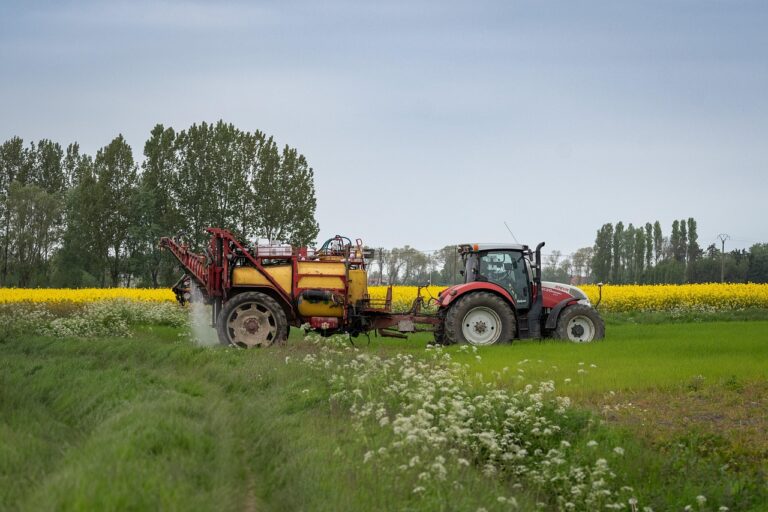
Industrial agriculture usually implies high external inputs and technology: tractors and combine harvesters; synthetic fertilizers and crop protection; hybrid seed; controlled feeding in livestock; and tight supply-chain coordination. These systems can achieve very high productivity per worker and, in favorable conditions, high yields per hectare. For example, modern irrigated rice or maize systems can produce multiple harvests per year, while confined poultry and hog operations can deliver rapid turnover measured in weeks or months.
The trade-offs are significant. Specialization can increase vulnerability to pests, disease, and market shocks, so risk management becomes central: crop insurance, futures contracts, biosecurity protocols, and diversified sourcing of feed and inputs. Environmental impacts can include nutrient runoff, soil compaction, water withdrawals, and greenhouse-gas emissions, which is why many commercial systems now adopt precision agriculture—variable-rate fertilizer, soil mapping, and targeted irrigation—to improve efficiency and reduce losses.
Alternative, Sustainable, and Climate-Smart Approaches
Some of the most discussed types of agriculture today aim to balance production with long-term ecosystem health. Organic farming limits synthetic fertilizers and pesticides and relies more on crop rotations, compost, biological pest control, and soil-building practices. Yields can be lower in some contexts, especially during transition years, but organic premiums and reduced chemical exposure can make it attractive where markets, certification, and management skills are in place.
Agroecology and regenerative agriculture emphasize processes rather than strict input rules: keeping soil covered with mulches or cover crops, minimizing tillage, diversifying rotations, and integrating livestock so manure and grazing support nutrient cycling. In dry zones, restoring soil organic matter can improve water infiltration and reduce erosion; in humid zones, diversified systems can interrupt pest cycles. These approaches often require more knowledge and careful timing, but they can cut input costs and improve resilience to drought and extreme rainfall.
Climate-smart agriculture is a broad umbrella that targets three goals at once: higher productivity, better adaptation, and lower emissions where possible. Practical examples include drought-tolerant varieties, improved irrigation scheduling, alternate wetting and drying in rice to reduce methane, and better feed and manure management in livestock. The common thread is measuring trade-offs and choosing practices that fit local constraints—land tenure, labor availability, and access to credit and extension.
Conclusion
The main types of agriculture—from subsistence smallholder systems to industrial commercial production and newer sustainable approaches—reflect different answers to the same challenge: producing reliable food while managing risk, labor, costs, and environmental limits. Understanding these contrasts helps explain why no single model fits every region or community.
FAQ
Q: Are the types of agriculture mutually exclusive?
No. Many farms combine elements, such as smallholders who grow staples for home use but sell vegetables, or commercial farms that adopt organic or regenerative practices to meet market and environmental goals.
Q: Which type is most productive?
It depends on the measure. Industrial systems are often highly productive per worker due to mechanization, while well-managed smallholder or diversified systems can be very productive per hectare in labor-rich areas, especially with irrigation and high-value crops.
Q: What drives a farm to change its farming type?
Common drivers include better roads and market access, availability of credit and inputs, land consolidation or fragmentation, climate variability, policy incentives, and consumer demand for traceable, sustainably produced food.
Key Sources
Food and Agriculture Organization of the United Nations (FAO): Tracks global farm systems and reports that farm size, market access, and agroecological conditions strongly shape production methods and outcomes.
Intergovernmental Panel on Climate Change (IPCC): Assesses how agriculture both affects climate through emissions and is affected by climate risks, highlighting adaptation and mitigation options across farming systems.
United States Department of Agriculture (USDA): Summarizes how mechanization, input use, and management innovations influence productivity and environmental performance in commercial agriculture.